Saturday, September 3, 2011

A Little Sometin Sometin

Here is a sampling of a much larger body of work. I hope you enjoy.


The Collapse of Metaphor


“As though the Muse preferred her half-wit sons” --Auden


A metaphor is a word or phrase which means something it does not mean. We owe to the metaphor the all the pleasures associated with pushing our elderly over the edge, without the terrors associated with killing them. When, for example, grandchildren and children “push grandpa over the edge”, it only means that they have said or done something irritating enough to exhaust his patients. It does not mean they have tossed him somersaulting over a precipice. Metaphors are not literal.

If we liked we could invent a metaphor for pushing grandpa into the street. We could say that when Johnny pushed grandpa into the street it meant that he taught the old man French as a second language. We could just as well say that it refers to the French street named Grandpa at the cross section of second Johnny. Unfortunately, however, we are left with no such fun. Pushing our elderly into the street remains literal and unexciting.

What has been called inauthentic by our generation emerges no more clearly than when viewing the way American Christians use metaphors. Unlike my attempt at the two metaphors above, our metaphors are often not even attempted. Phrases are regurgitated over and over, or worse still, so poorly conceived that the only credible responses are to roll one’s eyes or roll over in laughter. When i originally noticed the problem, i located its cause in Christianity's over-attachment to medieval phraseology. When our pastors pray, for example, they refer to Jesus as King or Lord, as our strong tower or shepherd. The trouble, of course, is that kings and lords, towers and shepherds, appear in our daily life as often as leprechauns do, and the analogy lacks a concrete association. The image is not immediately accessible.

But this seemed too harsh. After all, if we are to read scripture with any interest, these old analogies will need defending. Nevertheless, the problem, I felt, did not stop here. Christianisms in general seemed to nurture a kind of indefinite blank stare. Every off-handed “to the glory of God” or “I’ll pray for you brother” turned my stomach. Parts of our verbal tradition seemed contrived and half-baked; they derived, i believed, from truisms or overused images. They derived, in a word, from dead metaphors. Either our words were so old their meaning had been muddled or so new and poorly wrought they lacked depth.

I hasten to clarify that i do not believe 'to the glory of God' or 'what a blessing' or phrases as such are in their very essence evil things. Neither objective claims nor universal proclamations concern me just yet. My point is an psychological one.

It is difficult to communicate the seriousness of a cheeseburger to a fat man while he is in the midst of eating one. It is not something he does not already know; it is something he has already accepted. He knows it so intimately that he has forgotten it, like one forgets the route they take to get home. It is so familiar that it is barely happening at the conscious level. He is further along psychologically than any repeated cliché concerning the dangers of overeating can help.

The inauthenticity and shallowness of our metaphors are symptomatic in the same sort of way. The problem is not one particular cheeseburger or any particular cheeseburger, and the problem is not any particular metaphor. The problem is the state of mind which cultivates damaging habits. I myself have traveled the continents of this created earth, and found no greater cuisine than the cheeseburger. Neither Indian curry nor Italian wine hold sway. I can understand with fear and trembling the comforts of eating cheeseburgers until I have amassed the whole lot of them or the whole lot of me is a mass. But somehow American Christianity has avoided the same consternation concerning the degradation of how they speak about their God.

Yet if the changes in 20th century philosophy have illuminated one aspect of Christian doctrine, they have illuminated the verse which says “in the beginning was the Word.” They have been just as revolutionary concerning “and God ‘said’ let there be light.” They have shown us that coming into being and coming into meaning are very nearly the same thing. The first action of the mother with her new born baby is to christen her child with a name. Existence coincides with naming, naming with existence. It is impossible to conceive the one without the other. For example, you were not aware of the existence of the capitol “F” at the beginning of this sentence in the same sense as you will be by the time you finish this sentence. Naming the “F” took it from merely existing to existing as a piece of data within your consciousness. In philosophical terms, it went from the ontological into the phenomenological. Very often, philosophers prefer to talk the other way around.

Monday, August 1, 2011

Top 10 Books of the Past 6 Months


10. Lemoney Snicket's "A Series of Unfortunate Events"
O'Conner insists that ou
r best fiction is void of the author's voice and character. O'Conner, though penetratingly accurate in most areas, is uncharacteristically facile in this regard. The quality of a story is often enhanced by the interruptions of its teller. Such is the case with The Chronicles of Narnia; and such is the case with A Series of Unfortunate Events. Lemoney, whoever he may be, is hilarious and charming.


9. Paul Ricoeur, "The Symbolism of Evil"
Ricoeur's second naivety provided me with the vocabulary to make sense of my own journey. I cannot say just yet how influential he will be to my future, but i can say that i need to reread this book to find out.


8. Harold Bloom, "The Best Poems of the English Language"
Bloom is a pedant and self-appointed authority of everything. He is also a brilliant poetry critic. I've read the majority of the poems in this collection, and found only a few insights with which i disagreed. He rightly titles Shake
speare as our greatest poet and Poe as our most atrocious. Everyone in between receives a succinct, perspicacious analysis. I suggest it to any and all who love poetry.


7. Cervantes, "Don Quixote"
This book is silly. This book is fabulous. Somehow amidst madness and frivolity, Cervantes touches on all the greatest parts of narrative: inevitability, mystery, soliloquy, tragedy, morality, and individuality. It is supposedly the first modern novel. Whatever the case, it recapitulates the old hero epic. It is the story of Odysseus without his wits. It is a man in search of something he has already found.


6. Nietzsche, "The Will to Power"
Normally, reading Nietzsche is like reading the ravings of a flabbergasted whoopee-cushion. Until now, I have never read a work of his which made coherent sense, or for that matter, demonstrated intellectual honesty. Perhaps the Nietzsch simply lacked the time to edit (and therefore ruin) his
magnum opus. For my part, i am glad to see him abandon the project. It now turns out to be more than tolerable. His prophetic analysis and diagnoses of Western nihilism seems to me his greatest achievement. Whatever the milieu of the 21st century, Nietzsche is the premier philosopher to help us understand the current decline in our culture.


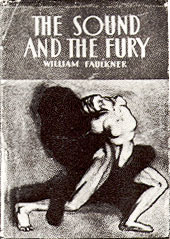
5. William Faulkner, "The Sounds and the Fury"
This book is about as unilateral as a roller coaster traveling through the mountains of Switzerland. Chronology has nothing to do with it. It is a book filled with characters and poetry. Even though at times it proves excruciatingly difficult to read, it remains, without question, the
par excellence and sui generis of all Southern Literature. I have read and recited quotes which will haunt me the rest of my life. Faulkner once again revives my hope for American literature.


4. Iris Murdoch, "Existentialists and Mystics"
Whatever i know of Plato, i have learned either from the horses mouth or from Murdoch. Whatever i believe concerning a theory of art, i have had Murdoch to teach it to me. I have read "The Sublime and the Good" at least ten times, gleaning more each run through. "The Fire and the Sun" summarizes everything i have adopted for myself from the works of Plato. Though Murdoch's affection for Freud sometimes limits her perspective, her knowledge of Kant and Wittgenstein illuminate Plato in light of the changes in philosophy. She is also, hands down, the easiest philosopher i have ever read.


3. Augustine, "Confessions:
I have read the first half of this book at least 20 times, and only this go around did i discover the richness of Augustine's discussion of moral psychology. Whatever i think of ordinate and inordinate emotions i have derived directly from the passages concerning the deaths of Nebridius and Monica. Augustine remains the most influential thinker in my life.


2. Jung/Segal "Jung on Mythology"
I thought i'd love reading Jung simply from what i heard others say about him. I was right. Both he and Freud have the tendency to generalize. The difference is that Jung is better at it. My intuitions have, as long as i remember, always been in line with his. Archetype, however unclear a word, carries something profound in its implications. Myth (whatever that thing is) is rightly treated as a positive, instead of a negative force in human culture. Jung takes Freud's discovery of the unconscious and puts it to proper use.


1. Mircea Eliade, "The Sacred and the Profane"
No scholar has influenced me as much as Eliade. Concepts like: nostalgia for paradise, axis mundi, in illo tempore, threshold, and Sacred and Profane space and time have already and shall forever alter my view of religious phenomenon. He comes from a Greek Orthodox background, yet writes with as unbiased, though still a religious, point of view one can possibly expect from a man. He has a classic case of thoroughgoing universalism, which, according to me, adds to his credit. He rightly points out the phenomenological consistencies amongst variegated religious communities, and systematizes them into a coherent and provocatively insightful whole.

Monday, July 25, 2011

On the Philosophical Implications Surrounding the Non-Existence of Unicorns

I have not read all the books, but i've learned enough to know that the single most important topic in the world is unicorns. Against nihilism, against the dogmatic utilitarianism of science, against the atheistic existentialism of Camus stands the unicorn, proud and prostrate in the unbending conviction that he does not exist. If a woman were to hoist herself up an American flagpole upside-down every Tuesday morning instead of eating breakfast, it would in no essential way differ from the action of that blessed sage who first conceived of the unicorn while sitting by some medieval (and doubtless enchanted) fireside.

The unicorn represents best of all that superlative value we call superfluity. He is as superfluous as a child playing hopscotch; he is as superfluous as a giraffe playing hopscotch. We do not need him, though we invent him. We do not use him, though we adore him. It is a remarkable paradox that the very non-existence of the unicorn is a celebration of being. The very fact that he does not exist in the physical universe (that we know of) excites us to the more appealing fact that he could have existed. In philosophy classes, this celebration of being might be humorously referred to as the celebration of "is-ness." As one poet says, "that you are here, that life exists, and identity."

Creative superfluity, as in the instance of the unicorn, is not the capricious act of combining arbitrary objects. One does not add a horn to a horse and deduce a unicorn. The unicorn stands logically prior to both the horn and the horse. No (real) creator aims to make a bricolage, though every creation is a bricolage. Given this, I can think of no other human act which imitates our Lord more intimately than the one to create or restore being.

And this--to abuse you with an oversimplification--is yet another region where our protean culture lacks in virility. Nihilism doesn't care about you let alone unicorns; utilitarianism thinks it reasonable to ride one unicorn toward a stable occupied by more unicorns only so that they may ride one of them (ad infinitum); and atheistic existentialist dislike unicorns as much as they ethics if they eat a bad tuna fish sandwich for lunch. It seems to me, then, that we can only experience an authentic celebration of being where we already have an authentic value of being.

Superfluous creation, being invented simply to love that being, offers the only satisfying model on which to appreciate the non-existence of the unicorn. By the same principle, and of infinitely greater importance, it is the only model on which to celebrate the existence of Venice square, of cheeseburgers, or of loved ones. It is, in a sweeping phrase, the only way to authentically celebrate myself.

Wednesday, July 6, 2011

The Tootsie Roll Rebellion


Miss Bluebird and Miss Shewbird were equally different and equally memorable bus drivers. We kids loved miss Bluebird and we despised Miss Shewbird.

One must understand the politics involved in riding the school bus to understand the quality of the bus driver. The only common currency among the respective passengers is candy. Children are, I admit, practicing Communists. Candy is brought, hidden, and distributed in commensurate portions. It is our way of sticking it to the man. Everything else, of course, is a matter of hierarchy. The class system provides the caste system. Seniors sit in the back, then the juniors, followed by the sophomores, and so on and so forth. Only occasionally were we 7th graders permitted to attend the more sophisticated high-school conversation. And this only occurred at the direct invitation of John Heaton, the eldest and coolest of the seniors. He was a social shepherd among eager sheep. We trusted our vehicular happiness to his whims and, as I am soon to articulate, his confectionery wisdom.

Miss Bluebird had driven the bus on my first day of middle-school. She was my first great bus driver and my last. For her, prepubescent and adolescent misbehavior was not so much punished as discouraged. "Please sit down" attended where a hasty "stop leaning out of the window or you'll die " would, perhaps, have been safer and more appropriate. The proverbial "more like guidelines than actual rules" may best describe her attitude. But we did not love Miss Bluebird because she let us stretch the rules. We loved her because she treated us like adults until we started acting like children. We were always safe. But of infinitely greater importance, we were always human. She knew about our candy fetish, and she knew it was technically against the rules. But she also knew that it was a stupid rule, and sometimes "the man" as such deserves a malevolent smile filled with chocolaty teeth. In the years she drove the bus, we traveled in a kind of mobile yellow utopia. I only wish we had known then, the year before her retirement, what we had.

Then came Miss Shewbird. It was not, I expect, an accident of fate that her name so closely resembled that of Miss Bluebird's. I cannot pinpoint which evil angel determined that such a close association exist between the two bus drivers, but I can say without question that it was a demon. Miss Shewbird was a noxious woman with a gaunt expression and a bad temper. She quickly eradicated all candy privileges, assigned seats, and permitted little else besides a whisper. Where once we had a candy stash in the back seat, like a Kangaroo pouch, we now had duct tape. Where once we were walked freely too and fro, we now sat still, alone, and bored. Where once mutual respect flowed like the milk and honey of Canaan, despair and dread consumed our hearts. She had established an Empire, and we were at her mercy.

Then came the Tootsie Roll rebellion. The passengers of bus # 8 had had enough of her disrespect and power-mongering. Usurpation lay on the brain, and we waited for our leader to determine our future course of action. Thus, through the very whispers authorized by Miss Shewbird, John Heaton, our sovereign shepherded, planned mutiny. Among other secrets, we still kept pockets of candy stored beneath the back two seats. Though it was scanty in comparison to the glory days, it was enough to hold a stockpile of Tootsie Rolls. There lie our arsenal and our hope. Each of us were appointed the task of chewing one piece of Tootsie and handing it to John for the construction of a brown, sugary missile. At each motion of the jaw a rush of nostalgia filled our minds. We remembered Miss Bluebird, and we remembered that we were free. We could scarcely sit still, and Shewbird, that infernal wench of a woman, could sense that something was up. She peered and scowled; she threatened detention. It was all to no avail. We turned a deaf ear. The missile was complete, and we all awaited--though not long.

Immediately after its completion the moment appeared as if summoned by the angel Gabriel himself. It seems where an evil angel provided an association in name, that good angel provided an association of color. As we turned the infamous bend aptly named “death corner,” a brown UPS truck approached at a rapid speed. John saw the brown of the tootsie and the brown of the UPS truck as sign as if from God, wrenched his arm back, shouted his maledictions, and hurled the missile at the truck. In less than a moment, BANG! SCREETCH! SHOUTING! Shewbird slammed on the brakes in horror. The missile had struck the inside of the UPS truck where no door exists, flying directly past the driver’s head. It sounded like gunfire.

Riotous laughter ensued. Shewbird whirled around in her chair horrified, wanting to point and accusatory finger. But it was all to no avail. We were silent. Our shepherd had stuck it to the man, and we were silent as lambs.
Thankfully, no one was hurt. I cannot remember the after-events nor the ensuing punishment. But it matters as little now as it did then. We had remembered who we were, and forever altered the course of Shewbird’s attitude. We had, as it were, effectively altered the bus-route. Just deserts with a just dessert, you might say. She never again crossed us for fear of what we might do. In fact, I remember her some years later smiling at me in a lunch line, recollecting the good ol’ days when I sat in the 3rd seat from the back, waiting for my turn to move to the Senior row.

Monday, June 27, 2011

What To Censure and When?

I wrote to a good friend of mine. “It's strange, isn't it, taking art seriously? It's a thing almost always on the verge of mere entertainment. And yet, for the artist, or at least the serious artist, it appears as either dross or gold.”

In a word, art either succeeds or it is not art. I grant, of course, that there is such a thing as degrees in single art pieces. To the majority of poets, Shakespeare stands alone. To the majority of novelists, Dostoevsky is our premier Russian author. But it does not follow that Frost can’t write beautiful lines, or the Tolstoy wasted ink on War and Peace. And though I think the success of an artists depends in great part to his/her talent, I do not think that success alone makes a good artist. I do not mean to use success in the sense of fame. I use success to mean that the artist creates within their mode—be it writing, painting, or music—in conjunction with a fundamental human way of interacting with reality better than others. The better they accomplishes this end, the more like reality their art appears, the greater their degree of success, the better their art.

Camus’ The Stranger appears to me as successful art. Though terrible and empty, like all things in cahoots with nihilism and Nietzsche, The Stranger turns out to be evocative precisely because it advertises the possibility that nothing is really evocative. The same can be said of the majority of Faulkner’s work. In a less austere way, the second chapter of Milton’s Paradise Lost appeals to the same sentiments.

Yet, upon reading Iris Murdoch for the past month, I cannot help but begin to make a tetradistinction between good and bad art, successful and unsuccessful art. The same of the good and bad artists, not merely the successful artist. The relationship between ethics and aesthetics is a tangled and confusing one, and I will not attempt to unravel it here.

But what I do wish to do is espouse the possibility that there is such a thing as successful art which is also bad art. That is to say, that there is such a thing as powerful, moving, pieces which ought never have been created. Pieces, moreover, that ought never be read, or looked at, or experienced. As of yet I am unsure what to make of Plato’s proposal that art ought to be censured. Augustine thinks so; so does Kant; so does O’Conner. They doubtless all take different approaches to the censuring: Plato goes political. Augustine takes it as a matter of moral psychology. Kant approaches it epistemologically. O’Conner turns to the authority of the church.

In certain cases, the proposal will seem blatant and obvious. Sophisticated pornography, a thing which undoubtedly exists, and extends beyond mere entertainment, ought not be created or looked at. But what do we make of pieces like The Stranger or Faulkner’s The Sound and the Fury or even Milton’s Paradise Lost? The mode by which we interact with these pieces influences us subconsciously. We are taught evil or good through our sentiments, taught to attach ourselves to certain philosophical principles unknowingly. Only after intense internal reflection do we grow aware of just how this or that piece formed us.

It might be that, like children, we can only expose certain things at certain times. Given normal circumstances, the sex talk with a 5 year old is probably not appropriate. But the sex talk with a 13 year old is another matter. It might be such an individualized matter that the only generalizing we may do is say that we must censure all art on an individual basis.

Monday, June 13, 2011

The Tool Section

Earlier this morning i walked into a Lowes looking to shop for paint supplies. Now i am not unfamiliar with shopping in these sorts of places. I spent a significant portion of my youth weaving my way through Home Depots and Lowes stores. But as i cannot possibly know where everything is, i am forced from time to time to ask one of the employees where i might find a particular item. And this morning i remembered why i prefer not to ask at all.

While turning a corner i spotted an older, balding gentelman wearing the--somewhat anti-manly--blue Lowes apron. I asked, "Excuse me, where might i find the hand sanders"? His reply i must say threw me and continues to throw me into a funk. With an air of indifference and a half gesture, he pointed and said, "the tool section."

Let's all pause for a moment to consider the implications of such a statement:


*pause*

Consider for a moment being me, a student of philosophy, and somehow having to make sense of such an unforgivable generalization. The tool section? I'm at Lowes! Everywhere is the tool section! One can easily imagine that prior to the founding of Lowes, a board of directors were deciding which name to call their store: either Lowes or The Tool Section. Every Lowes is the tool section of town. Every section within Lowes has tools. There is not a one tool that does not have a section or section that does not have tools. My logic is flawless. I am employing the simple law of identity. A thing which is a tool section by definition has tools. Every section of Lowes has tools, therefore tools reside in every section. Impeccable philosophy.

The worst part was his mediocre attempt at a pointing gesture. It was one of those where the guy slouches in a relaxed position, dragges his arm up one third the length of his body, and lifts, if you can call it that, his pointer finger in the "i don't really care if you find where i'm telling you to go" position. How can you even call that pointing? It's like his finger was taking a nap on some kind of invisible hammock and i had woke it from its slumber.

And there is a face that goes with this kind of gesture. You all know what i mean: mouth agape, eyes on the cealing. All the while a yawn and sigh accompany the whole sharade.

The tool section? Seriously? I think the guy could have done us both a favor, lifted his arm one third the length of his body, and "pointed" toward himself. "Excuse me, where is the tool section"?


Wednesday, May 25, 2011

A Bit On Comparative Religion

After spending the weekend with my grandfather repairing a roof, I've begun wondering whether humor doesn't transfer biologically. Both he and I agree on the importance of stating the obvious. That is, on stating the obvious obviously, as if it weren't obvious. For example, "be careful you don't slip, else you'll end up falling" or "I wonder if i take my time nailing these, whether it'll take longer." The first was mine, the second his.
The majority of the time, the subtlety of the joke goes unnoticed, or worse, gets taken seriously. But Popop and I were having a grand ol' time blathering off meaningless and tautologous sentences."
Later, the whole subtlety of the thing got me thinking. As a word, subtlety reminds me of two things. The first is that it is absolutely impossible to spell correctly on the first try. I can never get the 'L's and 'T's straight. The second, and only slightly less important, is that the majority of religious activity seems to occur as if shrouded by some unobservable force.
It is becoming more and more apparent to me that our former categories are presently in a sort of metamorphic state. We are now conflating, if I may borrow and misuse O'Conner's terms, Mystery and Manners. "My Cosmos" and "the cosmos" are turning into the same thing--a phenomenological possibility unattainable till this century.
The globalized American Christian, or at lest this globalized American Christian, is beginning to feel the intense struggle between the Mystery of homo religiosus and the Manners of, say, my shoddy excuse for being an Anglican. I am beginning to feel, in other words, the psychological strains created by the incessant juxtaposition of my particular world and the whole world. There are too many congruities between the impulses that drive Christians, Muslims, and Buddhists etc...(even secularists) to be ignored. Why, for example, do we all desire a "better," and hope to find it by transcending our present condition? Why does religious man distinguish between Sacred and Profane things? What is all this rigmarole concerning the imitation of the gods? The re-creation of the Creation through art or ritual? Why are so many different people, in so many different places, sacrificing so many different things to attain salvation? I'm not suggesting some kind of blind universalism, I'm declaring obvious trends among the vast majority of humans.
There are deep-seeded phenomenological phenomenon which subtly dictate the course of a religious enterprise. The difficulty is that the enterprises are remarkably similar, suggesting a remarkably similar phenomenology. And when the Mystery that is India is not so mysterious when you have three Indian friends, what becomes of your Manners? If my Manners reflect my phenomenology, and the Manners of the Indian reflect his phenomenology, aren't they, aren't you, both part Western and part Indian? Doesn't our identity get screwed up? Isn't a Southern hospitality which collides with Jamaican or German Manners no longer hospitality at its Southern best?
What on earth happens when you smash one worldview into a world? What happens, in short, when my religion meets comparative religion? Psychological dissonance? Recalcitrance? Integration?
It is almost as if the world has come full circle, and the war of the gods has started anew. Yahweh must now fight Allah instead of Baal; He must show us his wonders as standing in contraposition to the platitudes of Taoism. In a way, our generation (and especially our children's) will resonate with the O.T. Jews, a people who struggled to have faith in one God among many. The future, I'm afraid, will not consists in fighting against the mere onslaught of atheism. Christianity must learn to persist while fighting, in a sense never possible till now, the entire world.