Saturday, October 22, 2011

Odysseus

A poem is never finished, it is only abandoned. For now, i abandon Odysseus to the backwaters of my consciousness only to return to him a year or so from now. I am not unaware of the audacity of taking on such a project. Tennyson's Ulysses is without question one of the greatest lyrical poems in the English language. I am not trying to copy Tennyson. Nor am i copying him in writing yet another poem whose title is the same: Tiresias. My project is much larger overall, and will thus inevitably consists of unoriginal parts. But to my knowledge, the whole is entirely original. It just so happened that Odysseus came easiest to me after i'd already written Diomedes, and Diomedes so happened to come easiest after writing Helen--a poem which is not, in the same sort of way, a recreation of Sarah Teasdale's masterpiece. Yet again, it just so happened that Helen came easiest after writing Menelaus, a character who, if my research is right, no one has written a poem about--save a small piece by Rupert Brooke. Thus some parts are original and some not. Both Tiresias and Priam are on their way, and Achilles has at least one stanza nearly complete. Still many more will are to be added to the saga. If i were to rank the four i have Helen remains the best piece, if not my Magnum Opus. Diomedes and Odysseus are about the same in ranking, though for different reasons, and Menelaus is last, though, ironically, i think one of his stanzas is the best i've ever written. In any event, i hope you enjoy, i know i did.

Odysseus

Perhaps I’ll cast my spell on you,

Dangle some luck or slow down time,

Or strike a chime, or throw the die,

Or better still I'll sing a rhyme.

Takes some talent to make believable

Make believe, but pretend is what i do.

So what if i tell a half truth or the whole,

It matters little what’s actually true.


For have we not known gods in better moods,

Tinkering our way back to the shipyards?

Say Muse, say we were to harmonize with a

Dripping of blood drops, not some cacophonous bards:

Who’d believe wondering and wandering were the same,

Or home is the cause of home ‘cause my mother said so?

That happiness is a kind of growing used to death,

And death caused by the hoping come off the alpenglow?


I wade the threshold between shoal

And crowd—where waters tease the sand.

Between pallor and pith, sea and seeing,

And what no dull mortal can understand.


To play at theologian with the gods;

Esteem them rightly but know them wrongly,

Aghast at the words and sacred songs,

At last to feel what’s been felt strongly.

That they are a sham,

And that so am I,

And that still we count the bodies with same

Poise, the same pace, with which we stack them high.

That my life and the sunrise circuit strive on ‘mongst,

The spangled and glittering cadavers deranged,

And this ditty is but the pause between the first

And second twitching of a leg half rearranged.


Farewell! And farewell again!

The battle’s won a retreat!

Now beauty’s out there, lost in twilight,

Among the councils of stars replete.

The current of this man concurrent

With fickle winds and fickle kings.

The reckless oceans and the wide azure,

Is quiet, is home, is the thing of things.

Tuesday, October 18, 2011

Religious and Non-Religious Sentiments

It's strange to be the only religious person in a religious theories class. This weeks reading of Rudolf Otto's "The Idea of the Holy" proved particularly odd. Studying atheist after atheist eventually turns into good fun for we Christians immersed in the laicized community. In a way we are used to trying to strap on the consciousness of people whose ideologies and temperaments are fundamentally different from our own. We are the minority, and as such must adapt to the academic milieu. I think if one succeeds at true charity, he ends up being able to defend Freud's position better than Freud did. On my definition, charity not only thinks what they have thought and thinks beyond them, it feels what they have felt. Aristotle says that the mature mind can coherently manipulate ideas which are not its own. I think the same principle holds within the psychological realm. A mature psychology can feel sentiments which are not its own. A psychology which empathizes with the sentiments associated with atheism has succeeded not only in understanding atheistic propositions but the allure of those propositions. Everything else follows suit. The intuitions of the atheist, the creative relationship between fact and theory begin to have meaning. The positive or negative impressions toward religion--any religion--begin to have valence. When someone religious says something overtly religious, a Christian well versed in the sentiments of atheism can feel the anti-sentiments pique.

Whether this model demonstrates just how shaky my view of identity is, is another question--and one that needs answering. For now i'm curious about the blatant sentimental ignorance demonstrated to me during this week's class. Otto is explicitly clear: "The reader is invited to direct his mind to a moment of deeply-felt religious experience, as little as possible qualified by other forms of consciousness. Whoever cannot do this, whoever knows no such moments in his experience, is requested to read no father; for it is not easy to discuss questions of religious psychology with one who can recollect the emotions of his adolescence, the discomforts of indigestion, or, say, social feelings, but cannot recall any intrinsically religious feeling. " Otto goes on to give his famous account of the numinous. To my knowledge there is no greater account of it. Otto at times is so penetratingly accurate concerning it that i wonder how often he must have felt it. Much could be added and subtracted from his account, modified and what not, but it is an empirical/psychological observation unlike any other i've encountered. (I will not go into the details.)

What struck me in class, however, was the antagonism, the misunderstanding, the pure naivety concerning the subject. I sat dumbfounded at the inability of both the professor's and student's inability to access the content of the numinous. Some suggested that Otto didn't really think that the numinous was qualitatively different from normal sentimental experience. Some suggested that Otto did actually think that non-religious people could access the content of the numinous--why else would he write about it. Some simply threw their hands up in bewilderment.

In truth, it was only with the third type of person that i had any sympathy. It echoes Wittgenstein's "Whereof one cannot speak one must be silent." They at least recognized a category with which they had no familiarity nor possible access. It was like listening to a group of people talk about the experience of reading poetry who had never had the experience of reading poetry. They spoke of iambic pentameter and prosody where only reading a line of Thomas Hardy does the experiential knowledge justice. One does not explain Samuel Barber's Adagio for String with musical notes. You cannot abstract signifiers out of sounds. The only option is to press the play button or go to the concert hall. (Otto by the way uses the feeling of the sublime as one of his arguments from analogy. The experience of the Mysterium Tremendum is analogous to the experience of the sublime.)

It reminds me of Lewis' essay Transposition where "lower" feelings cannot attain to "higher" emotions. The meaning gets muddled. I do not doubt that there are atheistic sentiments with which i am unfamiliar. Likewise with agnostic. But it does not seem to me that they are qualitatively different from any other normal emotional state. They are accessible conceptually without actually having experienced the emotion itself. Additionally, they are, for me, easily experienced. "It's not" says Quentin from William Faulkner's The Sound and the Furry, "It's not when you realize that nothing can help you--religion, pride, anything--it's when you realize that you don't need any aid." All too true given naturalism; all too akin to Nietzsche's passive nihilistic attitude. And all very accurate to the sentiments i've felt myself acting as a quasi-atheist.

But where the essence of a certain feeling lies in its very inexplicability, where only arguments from analogy suffice, where ideograms are substituted for abstractions, the atheist and agnostic--without religious experience--simply have nothing to say. Otto and I may assume the phenomenological possibility of inter-subjectivity to do it (and who doesn't assume the possibility of inter-subjectivity?), but Christian camaraderie, heck, Christian and Buddhist camaraderie often derives from mutual experience of the numinous object--whatever it may be. It is curious that here, in the realm of phenomenological experience, that the religious category of "Spirit" attains the superior conceptual status.


Saturday, October 8, 2011

Sometimes a Man Just Needs to Write About What's on His Mind

Religious theorists like to answer questions surrounding the origins of religion. More often than not, it's in an non-falsifiable way. Freud makes the rather bold move of positing a pre-historical narrative. A group of sons killed their father, and, due to a sense of unconscious remorse, displaced that guilt of murder onto a Totem animal of some kind. The role of the father--protection-- thus became the occupation of the Totem. Sate the needs of the totem and the totem will sate the needs of the people. Later on within the evolution of this religious attitude, animism found the old Totem guilt re-displaced onto some kind of ghostly chimera. Mythological gods followed--slightly more abstract in nature--,and eventually the Immanent highly rationalized Yahweh (originally Jehovah) appears in the Semitic mythos. Add Christianity, Islam, and a tinge of Scholasticism, and what you have is a theologized, rationalization of a Deity figure, abstracted even beyond the capabilities of semantics (the negative differentia of Divine Simplicity). God is something so other He is not really something about which we can speak.

Nevertheless, for Freud, God still functions as a thing which cares for and protects, satisfies needs, and helps repress the original guilt, somehow sociologically (or physiologically?--Freud is never clear) latent within the collective mind. But even though religion or, later on, theodicy is therapeutic, they are incomplete therapy. In the way that a neurotic patient may hold some of his symptoms in abeyance via medicine, religions act as ephemeral cures. (Freud has a tendency to argue from the ontogenetic to phylogenetic analogy.) The disease remains, and only the only therapy is a recognition of, a naming of, a return and remembrance of the original event: the killing of the father. Once the causal event has meaning to the patient, healing follows via a proper ordering of the Id, Ego, and Superego. Once we, societies, know why and what we are repressing, we can begin to repress through the right modes viz. the scientific attitude. It's blatantly, and perhaps embarrassingly, akin to Plato's proper ordering of the desiderative, sentimental, and rational classifications of the soul found in The Republic. Health and happiness are caused through a rationalization of the internal man.

I could offer similar accounts from Weber, James, Jung, Eliade, Otto, Burkertt, Levi-Strauss etc. But my point for explicating Freud's account for the origin of religion is merely to demonstrate what sort of hoola-hoops thinkers are willing to go through to make sense of religious experience (at the personal level) and religious institutions (at the public level).

I find this need to construct a Weltanschauung a fascinating one. It fits, i think, into an impulsive category. It manifests itself as a need, a desire to be sated with "the thing which is the case." When we put the impulse into words, it comes out in conceptual form: but the event itself is not a concept. The phenomenon appears, furthermore, to be universal. I have never met nor heard of someone who does not desire to know--not necessarily even "the truth of truths", but any truth. If a disinterest in "what is the case" ever manifested itself in someone, i think i would be highly skeptical concerning the claim.

This impulse fits within the psychology of religion, or maybe more accurately, the psychology of Weltanschauung. We find ourselves with a need. From whence comes it? Christianity, of course, supplies a narrative to account for the impulse--not to mention that both Eliade and Otto (and even James) add their own religious models.

I don't know. Something about exploring these models feels--for me-- akin to the pleasure deriving from reading a poem or listening to a song. I wade in them like a man in an ocean, satisfied simply to explore the realms the current may take me. I realized upon reflection that this is the mode through which i construct my Weltanschauung. My methodology may appear a bit haphazard, and, i suspect, it is. Our current analytic tradition leaves us with the impression that schemas alone, logical validity, following premises to sound conclusions provide truths we may fearlessly adopt. Though in a sense i think this is right, i do not think it necessary to come vis-a-vis with truth. Too many people, normal people who don't blog about the Freudian fixations, construct worldviews on propositions they were told are true. Most people exist in a world argued from authority. To the degree that they adhere to truths, they do so because someone told them it was true. They arrive at truth by accident.

In the same sort of way, i have the impression that my methodological approach will place me in the position to acquire truth by accident. Coherency aside [or bracketed] and charity given, i think that to dabble is to know. More importantly it is to know a certain sort of thing. A long lost friend of mine once accused me of what he called "Tensionism." He was right then, and he is right now. The tendency to synthesize, to willingly suspend belief, the wish to eat a little bit of everything off of the buffet is really, in another sort of way, a construction of a Weltanschuanng. One object is to be full, the other object is to know "what is the case." I shall taste from the cornucopia of knowledge and be filled. The psychological dangers of such an approach take the form of dissonance and terror. The psychological advantages take the form of knowing a piece of truth in a way concurrent with the way someone else, fully engrossed in it, knows it completely. It is somehow, though not yet clear to me, related to Murdoch's definition of love--the extremely difficult realization that someone, other than oneself, is real. Additionally, it is related to James' account of hope standing in opposition to fear in "The Will To Believe." It is all a muddle, as one might expect from someone like myself. But i did not choose to see the world the way that i do; it feels, rather, like it chose me.

Saturday, September 3, 2011

A Little Sometin Sometin

Here is a sampling of a much larger body of work. I hope you enjoy.


The Collapse of Metaphor


“As though the Muse preferred her half-wit sons” --Auden


A metaphor is a word or phrase which means something it does not mean. We owe to the metaphor the all the pleasures associated with pushing our elderly over the edge, without the terrors associated with killing them. When, for example, grandchildren and children “push grandpa over the edge”, it only means that they have said or done something irritating enough to exhaust his patients. It does not mean they have tossed him somersaulting over a precipice. Metaphors are not literal.

If we liked we could invent a metaphor for pushing grandpa into the street. We could say that when Johnny pushed grandpa into the street it meant that he taught the old man French as a second language. We could just as well say that it refers to the French street named Grandpa at the cross section of second Johnny. Unfortunately, however, we are left with no such fun. Pushing our elderly into the street remains literal and unexciting.

What has been called inauthentic by our generation emerges no more clearly than when viewing the way American Christians use metaphors. Unlike my attempt at the two metaphors above, our metaphors are often not even attempted. Phrases are regurgitated over and over, or worse still, so poorly conceived that the only credible responses are to roll one’s eyes or roll over in laughter. When i originally noticed the problem, i located its cause in Christianity's over-attachment to medieval phraseology. When our pastors pray, for example, they refer to Jesus as King or Lord, as our strong tower or shepherd. The trouble, of course, is that kings and lords, towers and shepherds, appear in our daily life as often as leprechauns do, and the analogy lacks a concrete association. The image is not immediately accessible.

But this seemed too harsh. After all, if we are to read scripture with any interest, these old analogies will need defending. Nevertheless, the problem, I felt, did not stop here. Christianisms in general seemed to nurture a kind of indefinite blank stare. Every off-handed “to the glory of God” or “I’ll pray for you brother” turned my stomach. Parts of our verbal tradition seemed contrived and half-baked; they derived, i believed, from truisms or overused images. They derived, in a word, from dead metaphors. Either our words were so old their meaning had been muddled or so new and poorly wrought they lacked depth.

I hasten to clarify that i do not believe 'to the glory of God' or 'what a blessing' or phrases as such are in their very essence evil things. Neither objective claims nor universal proclamations concern me just yet. My point is an psychological one.

It is difficult to communicate the seriousness of a cheeseburger to a fat man while he is in the midst of eating one. It is not something he does not already know; it is something he has already accepted. He knows it so intimately that he has forgotten it, like one forgets the route they take to get home. It is so familiar that it is barely happening at the conscious level. He is further along psychologically than any repeated cliché concerning the dangers of overeating can help.

The inauthenticity and shallowness of our metaphors are symptomatic in the same sort of way. The problem is not one particular cheeseburger or any particular cheeseburger, and the problem is not any particular metaphor. The problem is the state of mind which cultivates damaging habits. I myself have traveled the continents of this created earth, and found no greater cuisine than the cheeseburger. Neither Indian curry nor Italian wine hold sway. I can understand with fear and trembling the comforts of eating cheeseburgers until I have amassed the whole lot of them or the whole lot of me is a mass. But somehow American Christianity has avoided the same consternation concerning the degradation of how they speak about their God.

Yet if the changes in 20th century philosophy have illuminated one aspect of Christian doctrine, they have illuminated the verse which says “in the beginning was the Word.” They have been just as revolutionary concerning “and God ‘said’ let there be light.” They have shown us that coming into being and coming into meaning are very nearly the same thing. The first action of the mother with her new born baby is to christen her child with a name. Existence coincides with naming, naming with existence. It is impossible to conceive the one without the other. For example, you were not aware of the existence of the capitol “F” at the beginning of this sentence in the same sense as you will be by the time you finish this sentence. Naming the “F” took it from merely existing to existing as a piece of data within your consciousness. In philosophical terms, it went from the ontological into the phenomenological. Very often, philosophers prefer to talk the other way around.

Monday, August 1, 2011

Top 10 Books of the Past 6 Months


10. Lemoney Snicket's "A Series of Unfortunate Events"
O'Conner insists that ou
r best fiction is void of the author's voice and character. O'Conner, though penetratingly accurate in most areas, is uncharacteristically facile in this regard. The quality of a story is often enhanced by the interruptions of its teller. Such is the case with The Chronicles of Narnia; and such is the case with A Series of Unfortunate Events. Lemoney, whoever he may be, is hilarious and charming.


9. Paul Ricoeur, "The Symbolism of Evil"
Ricoeur's second naivety provided me with the vocabulary to make sense of my own journey. I cannot say just yet how influential he will be to my future, but i can say that i need to reread this book to find out.


8. Harold Bloom, "The Best Poems of the English Language"
Bloom is a pedant and self-appointed authority of everything. He is also a brilliant poetry critic. I've read the majority of the poems in this collection, and found only a few insights with which i disagreed. He rightly titles Shake
speare as our greatest poet and Poe as our most atrocious. Everyone in between receives a succinct, perspicacious analysis. I suggest it to any and all who love poetry.


7. Cervantes, "Don Quixote"
This book is silly. This book is fabulous. Somehow amidst madness and frivolity, Cervantes touches on all the greatest parts of narrative: inevitability, mystery, soliloquy, tragedy, morality, and individuality. It is supposedly the first modern novel. Whatever the case, it recapitulates the old hero epic. It is the story of Odysseus without his wits. It is a man in search of something he has already found.


6. Nietzsche, "The Will to Power"
Normally, reading Nietzsche is like reading the ravings of a flabbergasted whoopee-cushion. Until now, I have never read a work of his which made coherent sense, or for that matter, demonstrated intellectual honesty. Perhaps the Nietzsch simply lacked the time to edit (and therefore ruin) his
magnum opus. For my part, i am glad to see him abandon the project. It now turns out to be more than tolerable. His prophetic analysis and diagnoses of Western nihilism seems to me his greatest achievement. Whatever the milieu of the 21st century, Nietzsche is the premier philosopher to help us understand the current decline in our culture.


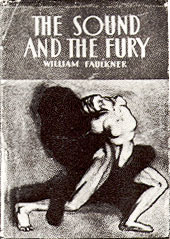
5. William Faulkner, "The Sounds and the Fury"
This book is about as unilateral as a roller coaster traveling through the mountains of Switzerland. Chronology has nothing to do with it. It is a book filled with characters and poetry. Even though at times it proves excruciatingly difficult to read, it remains, without question, the
par excellence and sui generis of all Southern Literature. I have read and recited quotes which will haunt me the rest of my life. Faulkner once again revives my hope for American literature.


4. Iris Murdoch, "Existentialists and Mystics"
Whatever i know of Plato, i have learned either from the horses mouth or from Murdoch. Whatever i believe concerning a theory of art, i have had Murdoch to teach it to me. I have read "The Sublime and the Good" at least ten times, gleaning more each run through. "The Fire and the Sun" summarizes everything i have adopted for myself from the works of Plato. Though Murdoch's affection for Freud sometimes limits her perspective, her knowledge of Kant and Wittgenstein illuminate Plato in light of the changes in philosophy. She is also, hands down, the easiest philosopher i have ever read.


3. Augustine, "Confessions:
I have read the first half of this book at least 20 times, and only this go around did i discover the richness of Augustine's discussion of moral psychology. Whatever i think of ordinate and inordinate emotions i have derived directly from the passages concerning the deaths of Nebridius and Monica. Augustine remains the most influential thinker in my life.


2. Jung/Segal "Jung on Mythology"
I thought i'd love reading Jung simply from what i heard others say about him. I was right. Both he and Freud have the tendency to generalize. The difference is that Jung is better at it. My intuitions have, as long as i remember, always been in line with his. Archetype, however unclear a word, carries something profound in its implications. Myth (whatever that thing is) is rightly treated as a positive, instead of a negative force in human culture. Jung takes Freud's discovery of the unconscious and puts it to proper use.


1. Mircea Eliade, "The Sacred and the Profane"
No scholar has influenced me as much as Eliade. Concepts like: nostalgia for paradise, axis mundi, in illo tempore, threshold, and Sacred and Profane space and time have already and shall forever alter my view of religious phenomenon. He comes from a Greek Orthodox background, yet writes with as unbiased, though still a religious, point of view one can possibly expect from a man. He has a classic case of thoroughgoing universalism, which, according to me, adds to his credit. He rightly points out the phenomenological consistencies amongst variegated religious communities, and systematizes them into a coherent and provocatively insightful whole.

Monday, July 25, 2011

On the Philosophical Implications Surrounding the Non-Existence of Unicorns

I have not read all the books, but i've learned enough to know that the single most important topic in the world is unicorns. Against nihilism, against the dogmatic utilitarianism of science, against the atheistic existentialism of Camus stands the unicorn, proud and prostrate in the unbending conviction that he does not exist. If a woman were to hoist herself up an American flagpole upside-down every Tuesday morning instead of eating breakfast, it would in no essential way differ from the action of that blessed sage who first conceived of the unicorn while sitting by some medieval (and doubtless enchanted) fireside.

The unicorn represents best of all that superlative value we call superfluity. He is as superfluous as a child playing hopscotch; he is as superfluous as a giraffe playing hopscotch. We do not need him, though we invent him. We do not use him, though we adore him. It is a remarkable paradox that the very non-existence of the unicorn is a celebration of being. The very fact that he does not exist in the physical universe (that we know of) excites us to the more appealing fact that he could have existed. In philosophy classes, this celebration of being might be humorously referred to as the celebration of "is-ness." As one poet says, "that you are here, that life exists, and identity."

Creative superfluity, as in the instance of the unicorn, is not the capricious act of combining arbitrary objects. One does not add a horn to a horse and deduce a unicorn. The unicorn stands logically prior to both the horn and the horse. No (real) creator aims to make a bricolage, though every creation is a bricolage. Given this, I can think of no other human act which imitates our Lord more intimately than the one to create or restore being.

And this--to abuse you with an oversimplification--is yet another region where our protean culture lacks in virility. Nihilism doesn't care about you let alone unicorns; utilitarianism thinks it reasonable to ride one unicorn toward a stable occupied by more unicorns only so that they may ride one of them (ad infinitum); and atheistic existentialist dislike unicorns as much as they ethics if they eat a bad tuna fish sandwich for lunch. It seems to me, then, that we can only experience an authentic celebration of being where we already have an authentic value of being.

Superfluous creation, being invented simply to love that being, offers the only satisfying model on which to appreciate the non-existence of the unicorn. By the same principle, and of infinitely greater importance, it is the only model on which to celebrate the existence of Venice square, of cheeseburgers, or of loved ones. It is, in a sweeping phrase, the only way to authentically celebrate myself.

Wednesday, July 6, 2011

The Tootsie Roll Rebellion


Miss Bluebird and Miss Shewbird were equally different and equally memorable bus drivers. We kids loved miss Bluebird and we despised Miss Shewbird.

One must understand the politics involved in riding the school bus to understand the quality of the bus driver. The only common currency among the respective passengers is candy. Children are, I admit, practicing Communists. Candy is brought, hidden, and distributed in commensurate portions. It is our way of sticking it to the man. Everything else, of course, is a matter of hierarchy. The class system provides the caste system. Seniors sit in the back, then the juniors, followed by the sophomores, and so on and so forth. Only occasionally were we 7th graders permitted to attend the more sophisticated high-school conversation. And this only occurred at the direct invitation of John Heaton, the eldest and coolest of the seniors. He was a social shepherd among eager sheep. We trusted our vehicular happiness to his whims and, as I am soon to articulate, his confectionery wisdom.

Miss Bluebird had driven the bus on my first day of middle-school. She was my first great bus driver and my last. For her, prepubescent and adolescent misbehavior was not so much punished as discouraged. "Please sit down" attended where a hasty "stop leaning out of the window or you'll die " would, perhaps, have been safer and more appropriate. The proverbial "more like guidelines than actual rules" may best describe her attitude. But we did not love Miss Bluebird because she let us stretch the rules. We loved her because she treated us like adults until we started acting like children. We were always safe. But of infinitely greater importance, we were always human. She knew about our candy fetish, and she knew it was technically against the rules. But she also knew that it was a stupid rule, and sometimes "the man" as such deserves a malevolent smile filled with chocolaty teeth. In the years she drove the bus, we traveled in a kind of mobile yellow utopia. I only wish we had known then, the year before her retirement, what we had.

Then came Miss Shewbird. It was not, I expect, an accident of fate that her name so closely resembled that of Miss Bluebird's. I cannot pinpoint which evil angel determined that such a close association exist between the two bus drivers, but I can say without question that it was a demon. Miss Shewbird was a noxious woman with a gaunt expression and a bad temper. She quickly eradicated all candy privileges, assigned seats, and permitted little else besides a whisper. Where once we had a candy stash in the back seat, like a Kangaroo pouch, we now had duct tape. Where once we were walked freely too and fro, we now sat still, alone, and bored. Where once mutual respect flowed like the milk and honey of Canaan, despair and dread consumed our hearts. She had established an Empire, and we were at her mercy.

Then came the Tootsie Roll rebellion. The passengers of bus # 8 had had enough of her disrespect and power-mongering. Usurpation lay on the brain, and we waited for our leader to determine our future course of action. Thus, through the very whispers authorized by Miss Shewbird, John Heaton, our sovereign shepherded, planned mutiny. Among other secrets, we still kept pockets of candy stored beneath the back two seats. Though it was scanty in comparison to the glory days, it was enough to hold a stockpile of Tootsie Rolls. There lie our arsenal and our hope. Each of us were appointed the task of chewing one piece of Tootsie and handing it to John for the construction of a brown, sugary missile. At each motion of the jaw a rush of nostalgia filled our minds. We remembered Miss Bluebird, and we remembered that we were free. We could scarcely sit still, and Shewbird, that infernal wench of a woman, could sense that something was up. She peered and scowled; she threatened detention. It was all to no avail. We turned a deaf ear. The missile was complete, and we all awaited--though not long.

Immediately after its completion the moment appeared as if summoned by the angel Gabriel himself. It seems where an evil angel provided an association in name, that good angel provided an association of color. As we turned the infamous bend aptly named “death corner,” a brown UPS truck approached at a rapid speed. John saw the brown of the tootsie and the brown of the UPS truck as sign as if from God, wrenched his arm back, shouted his maledictions, and hurled the missile at the truck. In less than a moment, BANG! SCREETCH! SHOUTING! Shewbird slammed on the brakes in horror. The missile had struck the inside of the UPS truck where no door exists, flying directly past the driver’s head. It sounded like gunfire.

Riotous laughter ensued. Shewbird whirled around in her chair horrified, wanting to point and accusatory finger. But it was all to no avail. We were silent. Our shepherd had stuck it to the man, and we were silent as lambs.
Thankfully, no one was hurt. I cannot remember the after-events nor the ensuing punishment. But it matters as little now as it did then. We had remembered who we were, and forever altered the course of Shewbird’s attitude. We had, as it were, effectively altered the bus-route. Just deserts with a just dessert, you might say. She never again crossed us for fear of what we might do. In fact, I remember her some years later smiling at me in a lunch line, recollecting the good ol’ days when I sat in the 3rd seat from the back, waiting for my turn to move to the Senior row.